TL;DR
Today, Lucidity is launching three new capabilities to bring block-storage-style visibility and cost optimization to Azure Blob:
- Object Mapping — a multi-layer heatmap of your entire blob fleet (account → container → prefix), drillable by size, tier, savings, or tags, with dollar-quantified recommendations at every level.
- Object Drift — one-click cleanup of 5 Day 0 waste categories: unused SFTP, geo-redundancy waste, unused RA-GRS secondary endpoints, underutilized Premium Block Blob, and idle accounts. More checks are on the way.
- Object Tiering — data-driven re-tiering based on real access patterns instead of calendar rules, cutting hot-tier waste by up to 90%.
Object storage is ~30% of cloud spend and mostly a black box today. Azure-native tools and FinOps platforms can't close the loop from insight to action. That's where Lucidity comes in.
Object storage is often the fastest-growing line item on the cloud bill, and for most enterprises, it's still a black box.
The average Azure environment has hundreds of storage accounts, hundreds of containers inside each one, and millions of blobs underneath that. All of it rolls up into a single line item. There's no analytical layer between that number and the data driving it, so teams can't tell you which blobs are costing the most, whether they're sitting on the right tier, or how much redundancy they're paying for twice.
AI and inference workloads are only accelerating this. Object storage is now roughly 30% of cloud storage spend, and up to 60% of it is recoverable, if you can actually see it.
Today, we're extending the Lucidity Platform beyond block storage into Azure Blob, with three new capabilities: Object Mapping, Object Drift, and Object Tiering.
The problem: scale nobody can manage by hand
Three things compound at enterprise scale:
- Complex hierarchy, no visibility. Millions of blobs live across thousands of accounts, containers, and folders, with ownership spread across teams and subscriptions. Nobody can tell you who owns what, or why.
- Inefficient tiering eats the budget. Most objects default to Hot and stay there because getting the right signals to determine tiering is not trivial.
- Sprawl builds up at scale. Redundancy left on defaults, unused features left switched on, and one-size-fits-all lifecycle policies compound into real money.
We've heard versions of the same three complaints from every team managing object storage at scale: "There's no way we can individually optimize hundreds of storage accounts." "We don't know where these files are coming from or who owns them." "We can't keep track of which blobs need what redundancy or configuration."
Here's what we built to fix that.
Object Mapping: break the black box
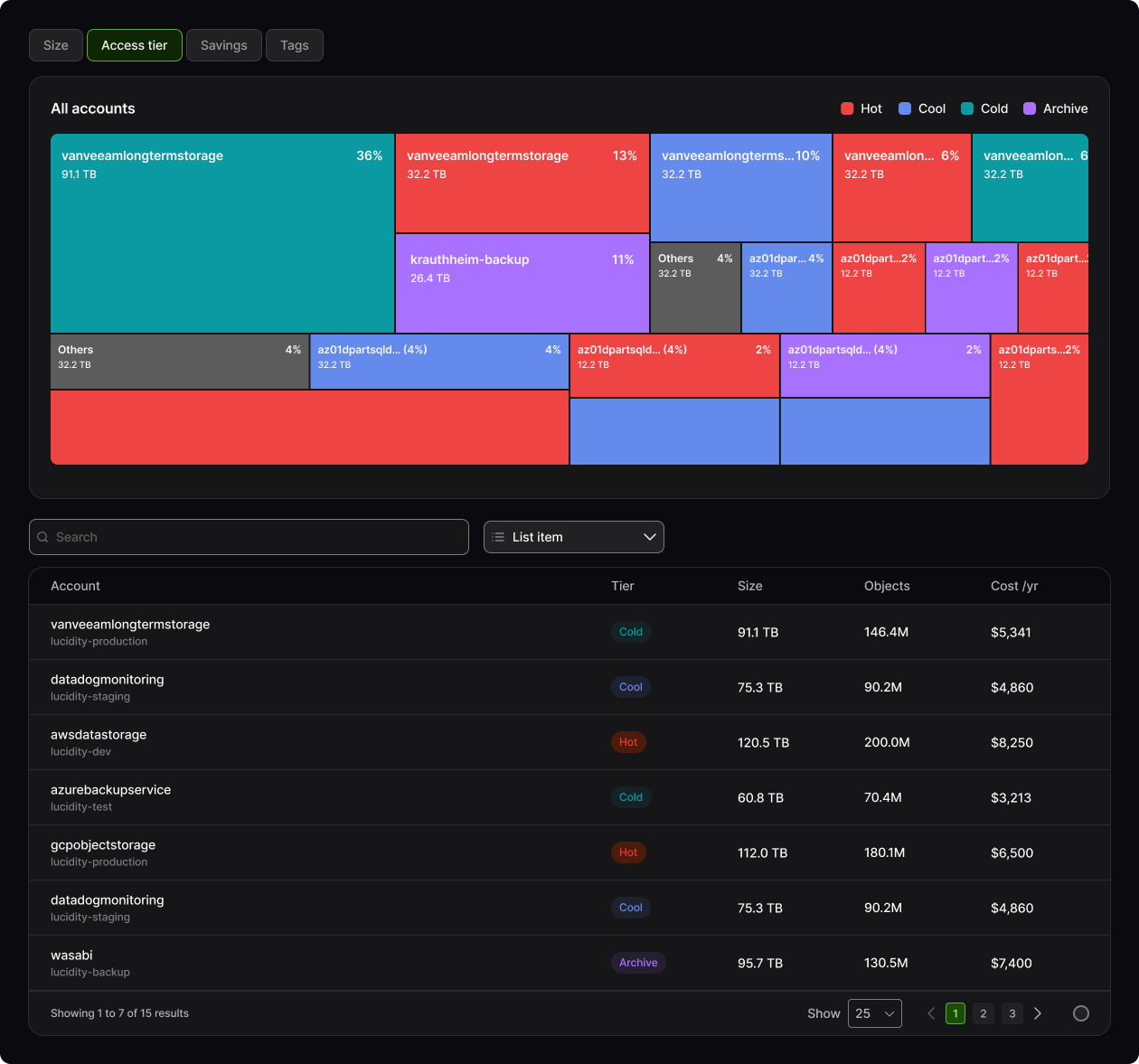
Object Mapping gives you a multi-layer heatmap of your entire Blob fleet — every storage account, container, and prefix, in one interactive view.
- See every layer. Drill down from account to container to prefix, with size, cost, tags, tier, and access/modification/creation age visible at each level.
- Explore it your way. Slice by access tier, savings, or all the tags used on your environment to get to what matters to you fastest.
- See savings before you act. Every recommendation carries a dollar figure, at every level of the hierarchy. This gives you visibility that leads directly to a fix, not just a dashboard to admire.
It's built on Azure's own Blob Inventory and ARM metadata, so it's agentless. There’s nothing to install, nothing running inside your environment, just integrate your Azure subscription with Lucidity and start getting insights.
Object Drift: savings starting on day zero
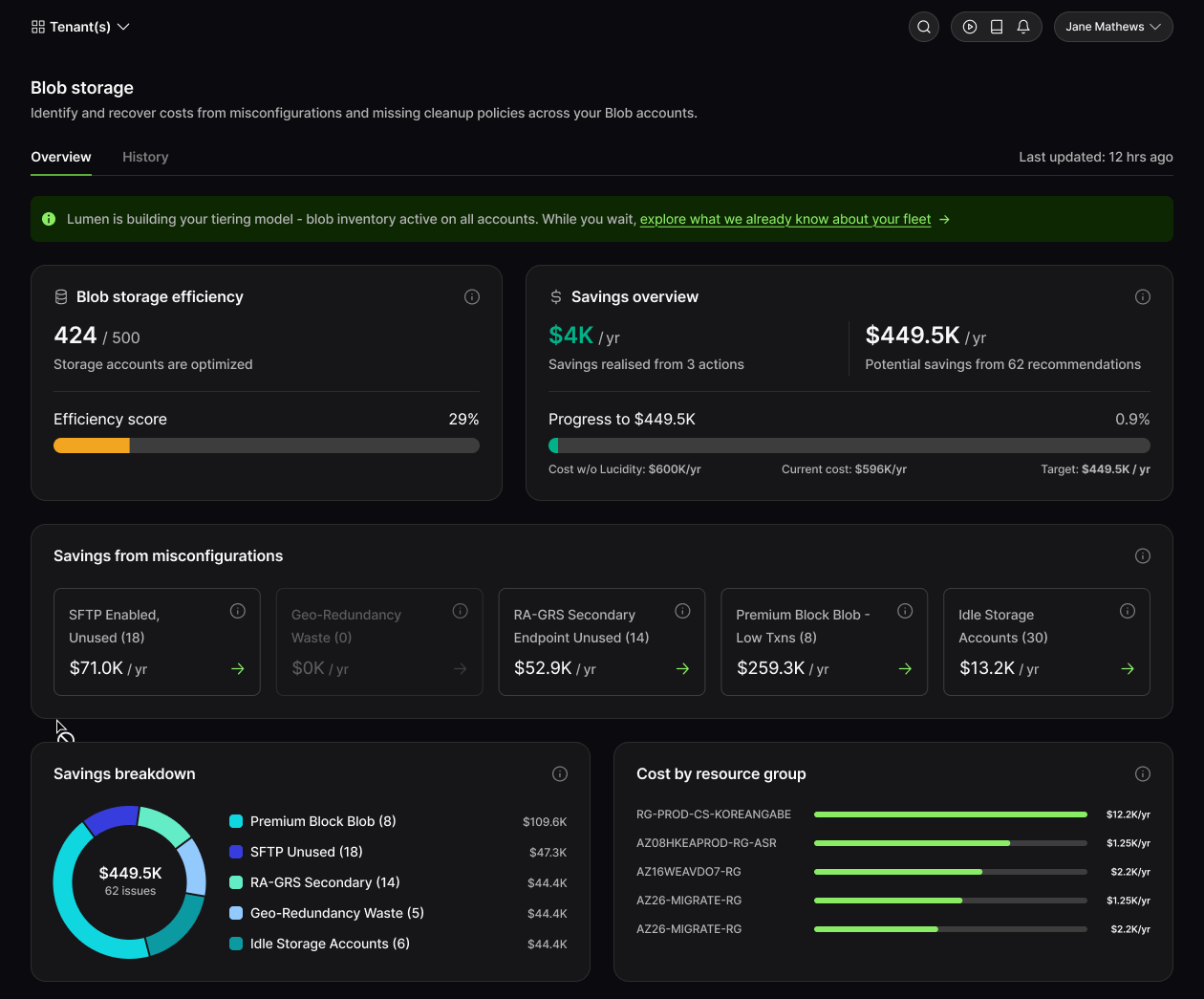
Object Drift finds the wasteful setup and misconfiguration that builds up at scale and lets you clean it up in one click. At launch, it checks five categories of Day 0 waste:
- SFTP enabled but unused. Azure charges a flat monthly fee just to have SFTP switched on, whether anyone's using it or not. We flag accounts with no active users or session history.
- Geo-redundancy waste. GRS keeps six copies of your data across two regions, at roughly 90% more than standard storage. We flag accounts with no reads, writes, or API activity over an extended period, and help you down-tier to LRS.
- RA-GRS secondary endpoint unused. RA-GRS adds a readable backup endpoint in a second region for a ~25% premium over GRS. We flag accounts with no read requests to that endpoint, and help you disable it without touching the underlying geo-replication.
- Premium Block Blob underutilized. Premium storage costs up to 10x standard and only pays off at very high transaction rates. We flag accounts paying for performance they aren't using.
- Idle accounts. We flag entire storage accounts with no transaction activity over an extended period, so you can decide whether to archive or retire them.
Every recommendation is dollar-quantified and confidence-scored, and you can act on it directly from the dashboard. That means no swiveling between the Azure portal and a spreadsheet and no JIRA tickets.
What's next for Drift: we're also building toward a second wave of checks: versioning without lifecycle policies, soft-delete left on past 30 days, unmanaged VHDs, and log containers without retention. These will extend Lucidity’s scope to catch configuration drift beyond Day 0. More on that as it ships.
Object Tiering: every blob on the right tier
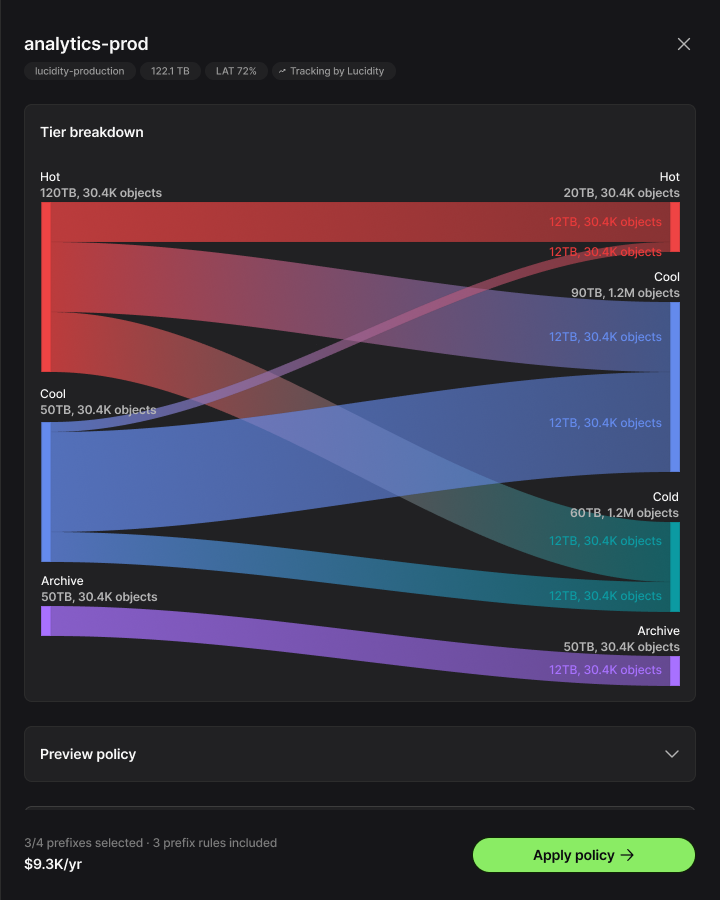
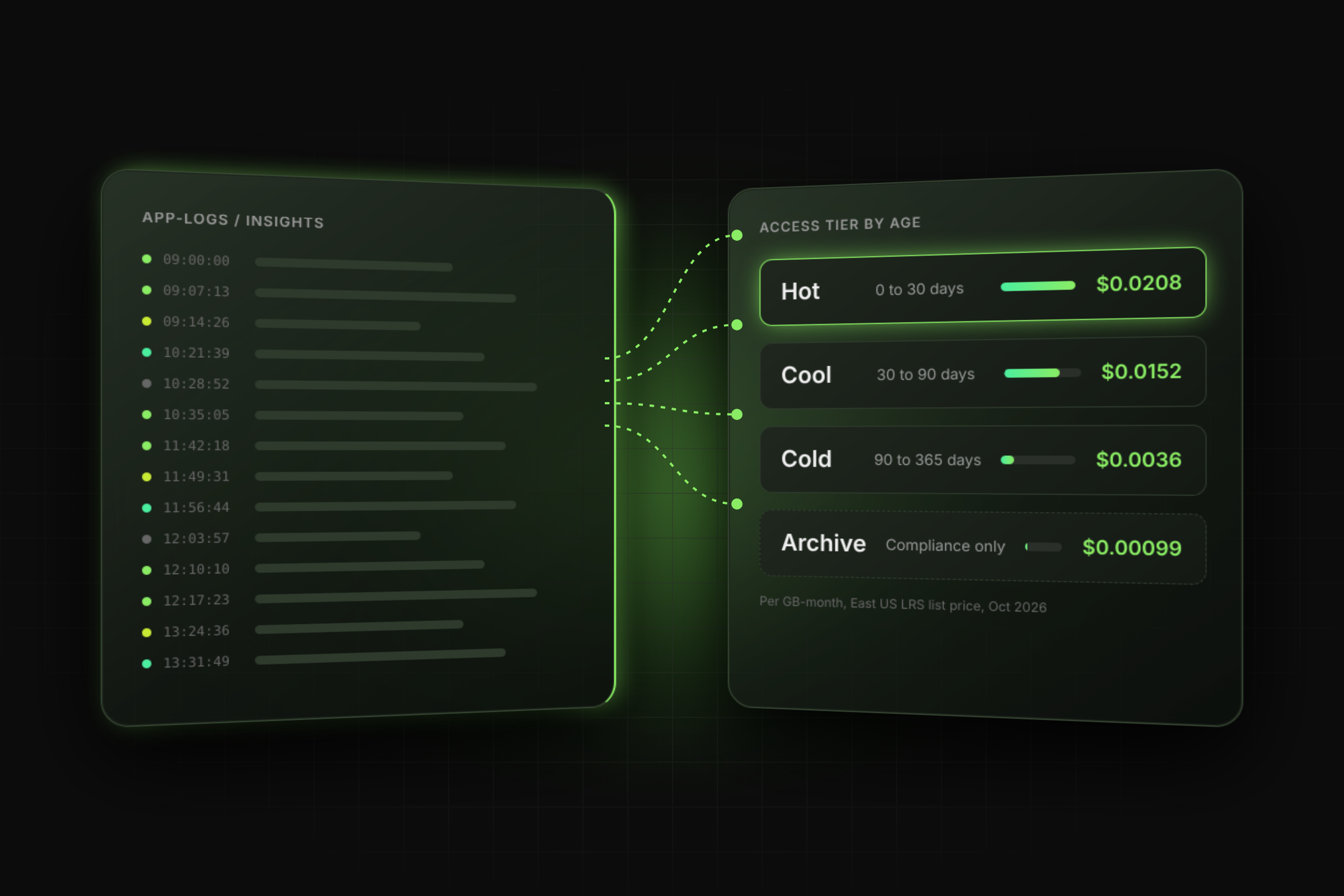
Once we've collected about 30 days of inventory data, Object Tiering starts making data-driven recommendations for moving blobs to the tier that actually matches how they're accessed rather than moving them based on blanket calendar rules.
- Context-driven, not calendar-driven. We analyze individual prefixes against real historical access patterns, so cold data moves to the cold tier and hot data stays put.
- Enterprise scale, one click. Lifecycle policies more granular than anything available natively, applied across millions of blobs without a per-object effort curve.
- Simulate before you commit. Preview the cost and posture impact of a policy change before you apply it.
Why native tooling and FinOps tools fall short
Azure's own tools can act, but only in blunt ways: Smart Tier runs on fixed calendar thresholds rather than actual access patterns, adds ongoing monitoring cost even after data moves to cooler tiers, and only supports a subset of redundancy types. FinOps platforms go the other direction. Some can surface visibility and even tiering recommendations, but stop there. None of them close the loop from "here's what's wasted" to "it's fixed."
Lucidity does both: the visibility to find the waste, and the one-click action to remove it, without a portal swivel or JIRA tickets.
Getting started
Object Mapping and Object Drift start delivering value from day one with no waiting period, and no agent to deploy. Connect your Azure subscriptions, then Lucidity enables Blob Inventory reports and Last Access Time tracking on your account and you start saving immediately. Object Tiering recommendations follow at the 30-day mark, once we have enough access-pattern data to tier with confidence.
If your object storage bill has been a black box until now, this is where that changes. To learn more, check out our upcoming webinar, or book a demo →
Table of Contents
Sign Up